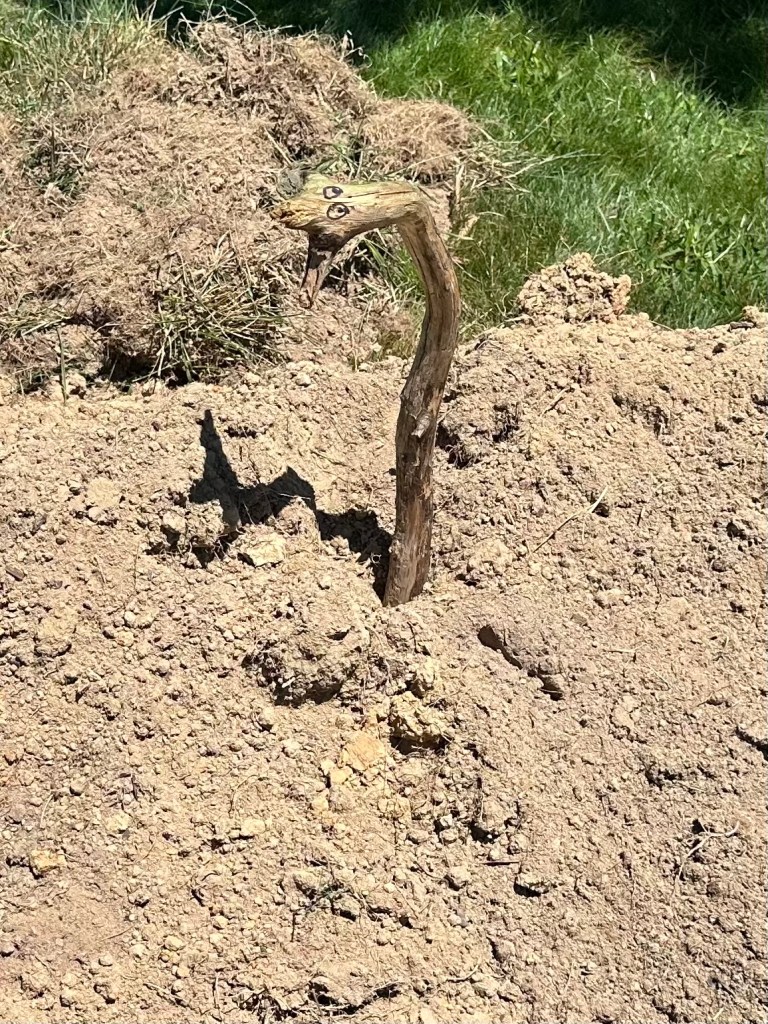
So, I’ve been spending a lot of time out in the backyard lately, digging up sod and planting gardens… sort of a getting back to nature sort of vibe for us this Spring. Throughout, I’ve been digging up earthworms. These insatiable little creatures are everywhere and spend a lifetime of eating and digging and well, sometimes being eaten.
My wife and I started asking worm questions, like what other creatures eat worms and do hungry people eat them? Are they of any nutritional value and what specific purpose do they serve in the ecosystem?
Earthworms’ main gig seems to be adding nutrients and fertility to the soil. They add to a soil’s permeability and add to the growth of microbes as they edge around, and under and over in-soil root systems. Many also know the high school biology version of how earthworms ingest food (dirt) and then excrete (poop) more enriched matter that adds those key nutrients to the soil.1
It seems fair to ask, “how did earthworms evolve” into this ecological niche? Would it surprise you to learn that their origins and functions deeply intrigued the likes of Aristotle and Charles Darwin? Darwin himself visited and re-visited their study during his 45-year-long career. His book The Formation of Vegetable Mould through the Actions of Worms may not sound like a real page-turner, but it did give rise to the scientific concept of bioturbation, which is essentially the “reworking of soils and sediments” through the presence rooting plants, burrowing animals, microbes, and yes… earthworms.2

According to scientists, there are over 6,000 earthworm species and they’re everywhere (except Antarctica), with one-third of the species in North America having been introduced there from Europe or Asia. While earthworm identification through the fossil record is nearly impossible, much research regarding their origin has benefitted from the preserved cocoons they laid their eggs in which would themselves fossilize. Pretty gross, huh? Their conclusions? Well, scientists found that the ancestor of all living earthworms lived over 209 million years ago, making earthworms “about as old as mammals and dinosaurs.” These earthworm ancestors then split into Northern and Southern Hemisphere groups around 178-186 million years ago. Not coincidentally, this was around the time of the breakup of the Pangaea supercontinent around 180-200 million years ago).3 These guys have been around quite a while, but not quite as long as I had supposed would be the case. I sort of thought they’d go back to the Paleozoic period, so it’s clear they’re not essential for biodiversity but extremely beneficial.
Anyway… we all pretty much know that earthworms get eaten by everything from invertebrates, reptiles, small carnivores and larger omnivores, but can people eat them, and what nutritional value do they offer? All species of earthworms are edible by humans and are considered a delicacy by the Maoris of New Zealand, and are eaten in parts of Africa, New Guinea, Japan, and South America.4 Worms are actually a good source of protein, healthy fats, and vitamins and minerals.5
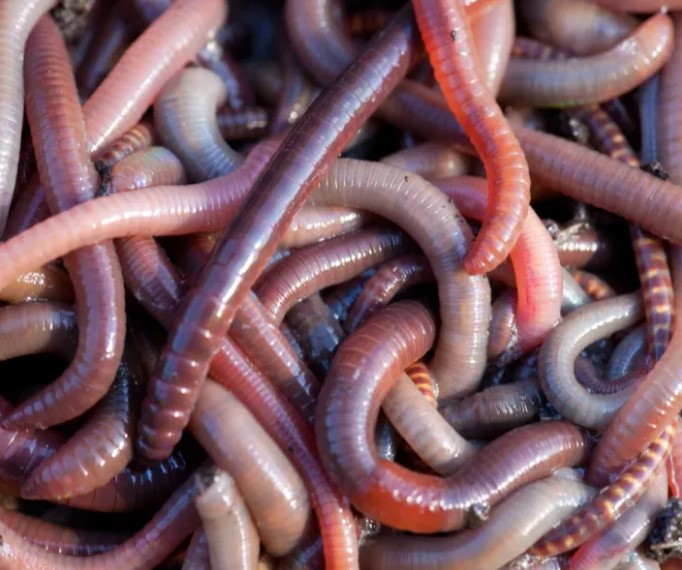
BIG Caution here folks… DO NOT eat worms raw! They can carry very nasty parasites, but it is safe to eat them cooked whether thoroughly steamed, smoked or boiled.6 Sort of reassures those of us who grew up reading the children’s book How to Eat Fried Worms that maybe it’s not such a gross idea after all… if you’re really hungry, that is.
- Edwards, Clive A., and Patrick J. Bohlen. Biology and ecology of earthworms. Vol. 3. Springer Science & Business Media, 1996. ↩︎
- Kutschera, U., and J. M. Elliott. “Charles Darwin’s observations on the behaviour of earthworms and the evolutionary history of a giant endemic species from Germany, Lumbricus badensis (Oligochaeta: Lumbricidae).” Applied and Environmental Soil Science 2010 (2010). ↩︎
- “The Evolution of Earthworms.” BMC Series Blog, 1 Jun. 2017, blogs.biomedcentral.com/bmcseriesblog/2017/06/01/the-evolution-of-earthworms/. Accessed 31 May 2024. ↩︎
- “Are Earthworms Edible?” Culinary Lore, 22 Mar. 2013, culinarylore.com/food-science:are-earthworms-edible/. Accessed 31 May 2024. ↩︎
- Alexis, Amber C. MSPH, RDN. “Nutrients in Edible Worms.” Healthline, 24 Feb. 2022, http://www.healthline.com/nutrition/eating-worms#bottom-line. Accessed 31 May 2024. ↩︎
- Dayton, Carl. “Can You Survive Eating Earthworms?” Outdoormeta, 1 Jan. 2024, outdoormeta.com/can-you-survive-eating-earthworms/. Accessed 31 May 2024. ↩︎



 Just Joe
Leave a comment